Galactic Racer Vranki Jump Contracts: Prepare the Approach and Landing
Prepare for Vranki’s crowd-jump contract example with a clear approach, enough landing room and objective checks, without invented scoring or failure.
By Star Wars Galactic Racer Guide editorial team Last updated
For Vranki’s crowd-jump contract example, prepare the approach and the landing before adding speed or another objective. The official Rivals and Backers explanation uses dazzling jumps as Vranki’s example, but it does not publish a universal score, distance target or rule for every landing. Read the exact contract offered by your campaign, practice the relevant action, and check the result the game gives you.
Read the offer before choosing the maneuver
Vranki is one of the Backer choices named alongside Sidon Ithano and Q-33N. Backers supply the League Token needed for a Tour and expect contracts in return. The general choice is covered in the Backer guide. This page focuses on executing the jump-shaped task rather than ranking the Backers.
Start with the contract’s actual words. Note the action, any count or restriction shown, and the feedback the interface uses to record progress. Do not assume a jump that looks spectacular satisfies an objective merely because it resembles the promotional example.
If the offer differs from the example discussed here, follow the offer. Avoid turning a general introduction to Vranki into a claim that every contract from that character is identical. The task in your campaign is the one you need to prepare for.
Find the approach before committing to speed
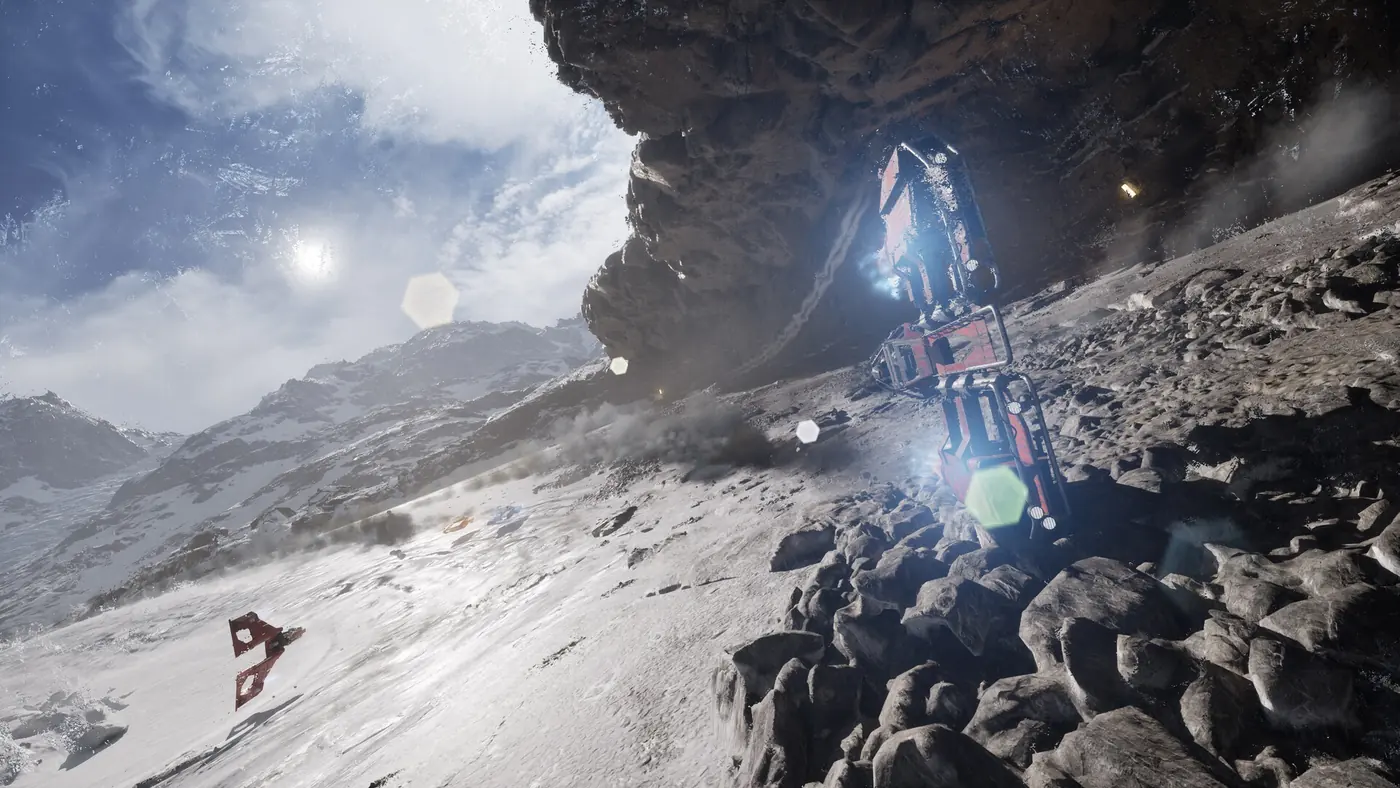
Use a relevant practice event when available. Identify where the approach begins, what line takes you toward the jump, and where the vehicle needs to be after landing. The screenshot above illustrates terrain; it is not a measured diagram of the contract’s required jump.
Choose a visible reference before the approach. Make sure another vehicle will not hide the only cue you are using. If traffic obscures it, leave room or choose a clearer approach rather than copying the vehicle ahead. That racer may take a line unsuitable for your craft or objective.
Drive the section at a manageable pace first. The aim is to understand the sequence, not to prove maximum speed on the first pass. If the landing leads immediately into another turn, include that turn in the practice. A jump is not isolated from the rest of the route.
Keep the craft familiar
A new vehicle class and a new jump are two learning tasks. Keep one familiar while working on the other. The official class descriptions give landspeeders, bikes and skim speeders different handling identities, while pods race separately because of their greater speed and size.
Use the class comparison if you are choosing among speeders and the podracer guide if the event uses a pod. Do not assume a maneuver learned in one class transfers with the same approach and clearance to another.
Inspect the equipped craft before practicing, especially after an update. The October 22 quality-of-life note warned that campaign customization could reset. A changed setup can explain an unfamiliar response without requiring a theory about a hidden jump penalty or a changed contract.
Separate takeoff, clearance and recovery
Review three parts of the attempt. First, did you arrive on the intended approach? Second, did the craft clear the relevant terrain without unwanted contact? Third, did you recover onto a usable line for the next section? Identify the first failure before changing the next attempt.
If the entry is wrong, work on the earlier reference and approach. If clearance is the problem, compare the actual path and craft rather than blindly adding more speed. If the landing is clean but the next turn is lost, change the recovery plan. These are practice diagnoses, not fixed physics formulas.
Avoid stacking several corrections during an uncertain landing. Let the craft’s response become readable before adding another aggressive action when the situation permits. The goal is a repeatable recovery, not an accidental finish whose successful input you cannot identify.
Add boost only after the route is understandable
Use the controls and warnings shown by your current craft. Pick the release point as deliberately as the commitment point. A longer boost can make the approach feel powerful while leaving too little room to prepare for what follows.
The boost practice guide covers that decision. It does not supply a universal safe duration, because equipment and event circumstances matter. Do not adopt an exact heat threshold from a video unless its configuration and evidence match the test you are trying to repeat.
If a practice attempt succeeds only when traffic happens to leave the landing clear, treat it as conditional success. Plan what you will do when the same space is occupied. An objective does not remove the need to read other racers.
Do not let a rivalry take over the attempt
The campaign can combine contract decisions with rivalry stakes. That does not mean both should govern the same maneuver. A rival moving into the approach is a reason to reassess the opening, not proof that the contract demands an aerial attack.
Keep attention on the action the contract requests. When considering a separate rivalry, read the stake and use the rivalry guide to prepare. A familiar opponent’s name does not guarantee that the next contact will be predictable.
If the route becomes unsafe, prioritize understanding the resulting event state. This guide does not invent a rule that every crash invalidates the contract or that every jump before a DNF counts. Those conclusions must come from the objective feedback and result.
Check the result before repeating the whole sequence
After the attempt, inspect the contract progress and the event result. If the action did not count, compare the contract wording with what happened. Preserve a screenshot or short note of both before changing vehicles, choosing another event or concluding that the condition is broken.
When the result is clear, decide the next useful step. Repeat the approach if it remains inconsistent, adjust recovery if the landing leads to another error, or return to the Tour when the action is deliberate and the contract condition is understood. A practice routine is complete when it prepares you for the task actually offered, rather than a cinematic version of what a Hutt might enjoy watching.