Galactic Racer Podracers: Access, Practice and the Campaign Transition
Find the right pod event, prepare for the change in size and speed, and separate Arcade practice from the campaign podracing chapter and online queues.
By Star Wars Galactic Racer Guide editorial team Last updated
Podracers race separately from landspeeders, bikes and skim speeders. Their size and speed make them a distinct driving problem. If you want to try a pod, inspect the available Arcade and Scenario events; if you are continuing the campaign, follow its current objective rather than expecting every pod event to appear in the speeder garage.
Start with the event, not a hidden unlock theory
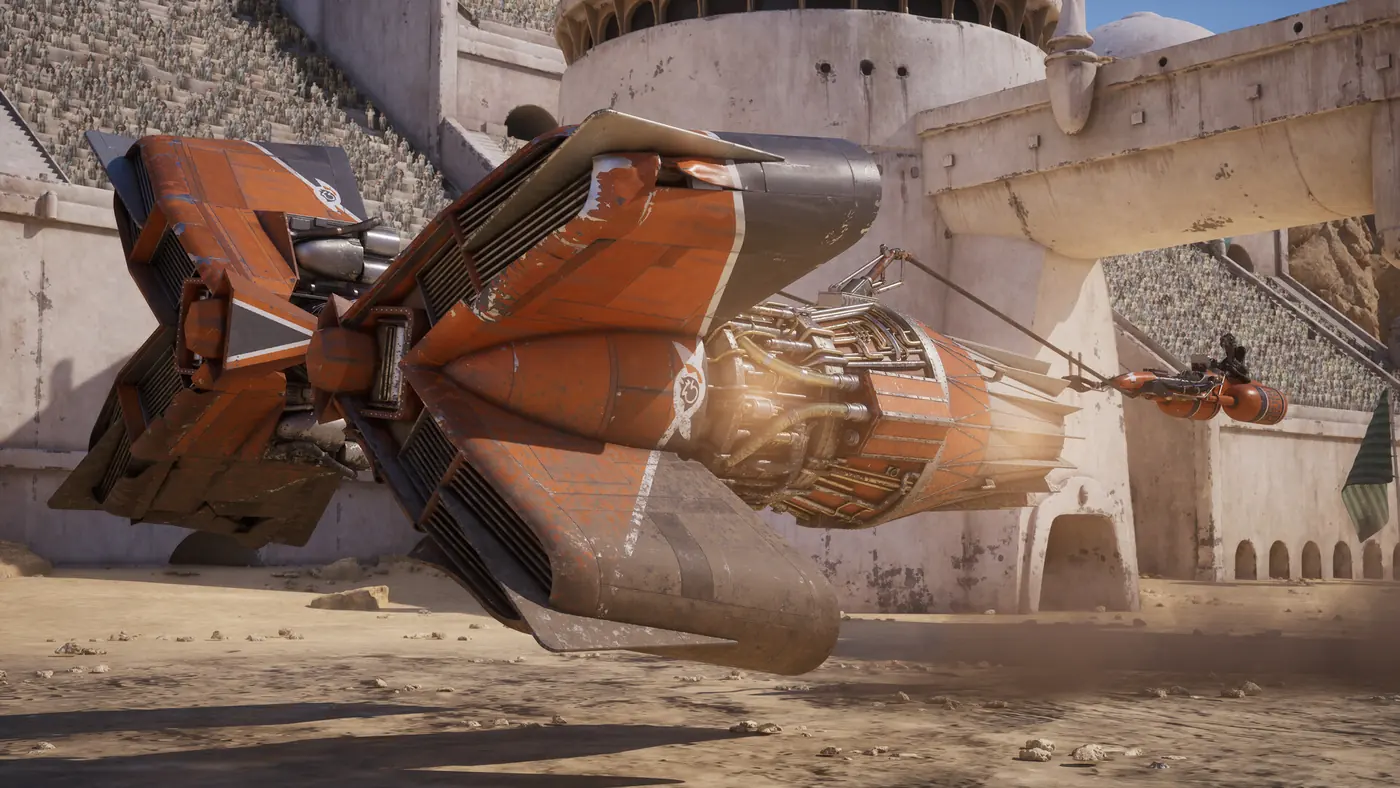
The official game description establishes podracers as a playable class, and the launch announcement explicitly separates their races from the speeder classes. That distinction is the first thing to check when a familiar multiplayer or campaign menu does not offer the vehicle you expected.
Read the event name, permitted vehicle and objective together. A pod time trial, a story event and an online race can share the general activity of podracing without sharing access rules or completion conditions. Do not spend campaign resources trying to solve a menu-selection problem.
The official story introduction confirms that you can jump straight into podracing through Arcade when starting the game. Choose a suitable pod event there and read its requirements. For a specific campaign block in Act 3, use the Act 3 vehicle-switch plan. That article answers the progression question. This page handles preparation and the driving transition, so it does not invent a second set of campaign gates or promise that a practice medal bypasses the story.
Why the switch feels different
The official launch and vehicle introductions emphasize exceptional speed and little room for error. A practical response is to give yourself more visual and physical margin while learning. Avoid carrying a speeder habit into the first pod race merely because the accelerator feels familiar.
Look at the full width of the vehicle rather than treating the cockpit as the only point that must clear an obstacle. Choose a line that allows the engines and the rest of the craft to pass. A gap that looks generous from the center of the screen can still be a poor choice if another pod is entering it.
This is a practice recommendation, not a claim about a measured collision box. We have no controlled clearance measurement to publish. Your first clean pass should establish which visible gaps you can take reliably in the actual event and vehicle, with enough room to abandon a move if traffic changes.
Build a reference lap
Start by aiming to finish without unnecessary contact. Read the first unfamiliar bend early and leave enough speed margin to adjust. Choose two or three visual landmarks: a change in surface, a rock opening or a clear structure beside the route. Use landmarks to remember where the next decision begins.
Do not choose a landmark that disappears behind the vehicle ahead whenever you draft. If you cannot see your braking reference in traffic, move to a line with visibility or pick another reference. A faster-looking approach has little value if you cannot repeat it when a rival occupies the center of the screen.
After the attempt, identify the earliest preventable mistake. A collision late in a sequence can be caused by a poor entry several seconds earlier. Correcting the first error often removes the following ones. Resist the urge to rewrite the entire lap after every impact.
Add speed where the route is already readable
Once a section is clean, decide where you can add commitment. Use a straight or a bend whose exit you can already identify. Keep the next uncertain section conservative so that you can assess the change you made. This makes the comparison informative even without a lap-time spreadsheet.
If you add boost and repeatedly arrive too fast for the following turn, the useful adjustment is usually earlier release or a different commitment point. It is not proof that the craft is bad. Read the actual boost controls and warnings in your current build, and use the boost practice guide if heat or overcommitment is the recurring problem.
A clear road and a crowded road require different margins. Do not assume that a line which works alone is available during a race. Leave an alternative before attempting an overtake near a narrow entrance. If that alternative is a wall, the move was already too constrained.
Keep the campaign question separate
The campaign’s podracing stretch introduces a transition in both story and vehicle demands. Players asking about Tales of Podracing are often asking two different things: where pod driving begins, and how to remain comfortable after leaving a familiar speeder setup.
For the first question, follow the campaign objective and use the dedicated Act 3 guide when that is the stage displayed. For the second, return to a suitable practice event and repeat the particular maneuver that is causing trouble. Grinding an unrelated speeder race does not automatically teach pod width or a new corner approach.
Before re-entering the campaign, check the selected craft and controls. Then set a narrow goal for the next attempt: complete the opening section cleanly, avoid one repeated collision, or understand the objective that failed. A specific learning goal is more useful than declaring the whole vehicle transition impossible after one bad event.
Online pod events and group expectations
Because pods race separately, agree on vehicle and event before gathering friends. A speeder race is not evidence that the next queue includes pods. Check the actual menu together and distinguish the party size from the total number of participants the event can hold.
The October 22 update increased online parties to six. It did not, by that fact alone, establish every possible private-room or local-play arrangement. Use the multiplayer Tour guide for group preparation and confirm the specific playlist you intend to enter. Avoid promising a friend a pod-only private session on the basis of an old community request.
A useful stopping point
End a practice session when you can describe the main remaining problem. If the craft clears the course alone but struggles in a pack, work on traffic decisions. If the same opening catches you every time, keep practicing the reference and entry. If stuttering interrupts otherwise consistent attempts, switch to PC diagnosis rather than changing vehicles.
You do not need a fabricated perfect lap time to know whether practice helped. Fewer repeated impacts, a clearer exit and a maneuver you can deliberately repeat are concrete signs of progress. Bring those habits back to the event you wanted to play.