Galactic Racer Modes: Choose a Campaign, Arcade or Online Session
Choose a Galactic Racer mode by your goal, available time and group. Separate campaign progression, Arcade practice, Scenarios and online Tour preparation.
By Star Wars Galactic Racer Guide editorial team Last updated
Choose Campaign for a branching solo run, Arcade for focused driving practice, Scenarios for specified challenges, and online multiplayer when you want to race other people. Start with the activity you want to finish today. A mode can share vehicles and locations with another mode without sharing its objective, progression or matchmaking rules.
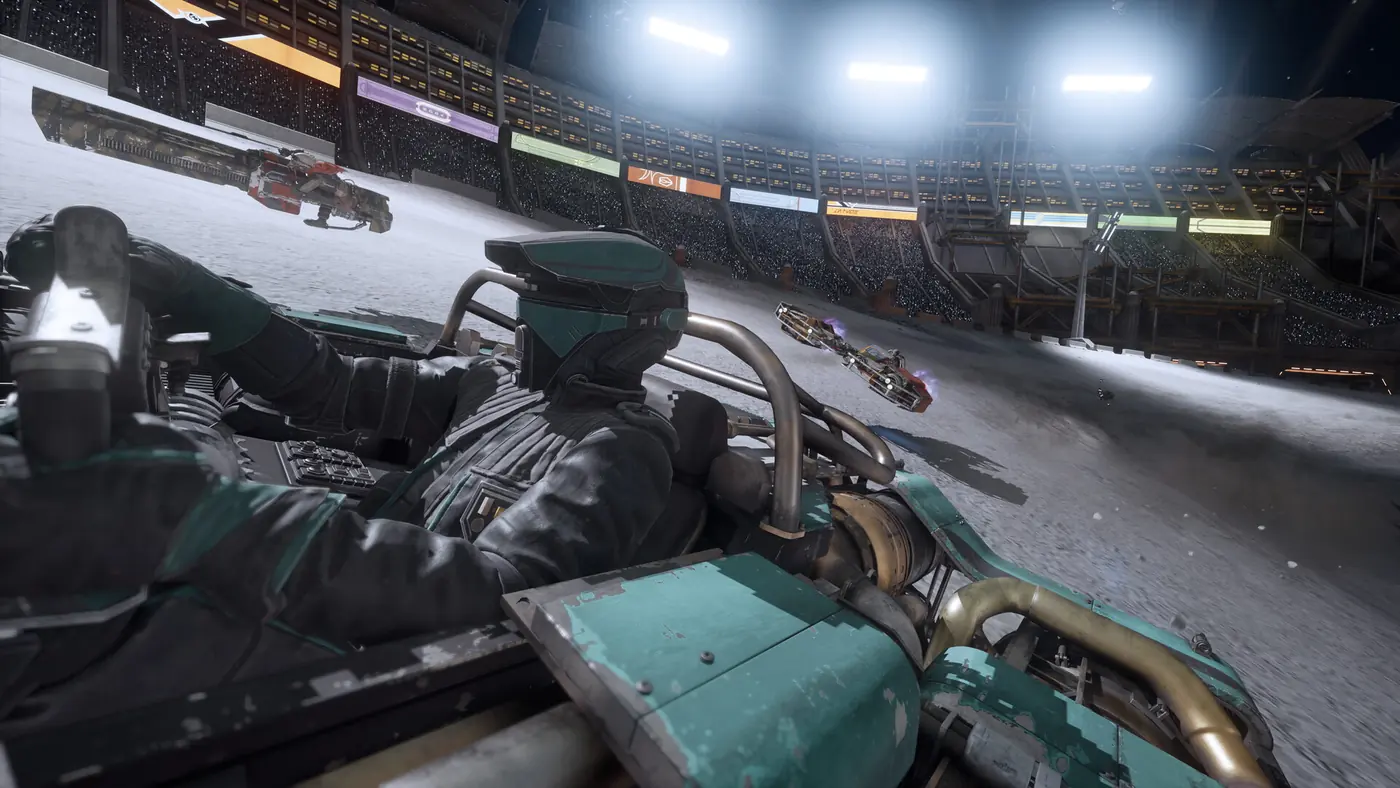
Start with one question
Ask what would make the session successful. Learning a difficult turn, progressing Shade’s story and keeping a group together are three different goals. If you try to do all three in one session, it becomes difficult to tell whether the problem is driving, preparation or the mode you selected.
For a short solo session, choose a repeatable practice event. For a campaign evening, leave enough time to make decisions between races and inspect the craft. For a group session, agree on the event type before inviting everyone. This is a planning method, not an estimate of how long the game takes to finish. Your stopping point should be an event result or a safe menu, not an arbitrary number of minutes.
Campaign: decisions around the race
The campaign places Shade in the Galactic League, working with Hibi and confronting Kestar Bool. Its branching events offer opportunities to develop a craft with parts, tools and upgrades. The central question is therefore broader than which line is quickest: what should you prepare before committing to the next event?
Before choosing, read the event description and inspect the current craft. Identify one thing that could prevent you from finishing: unfamiliar handling, weak survivability, an ability you cannot use reliably or a contract that demands a maneuver you have not practiced. Address that before buying another change simply because it is available.
The first Tour guide handles those preparations in detail. Keep campaign decisions there. When a run goes badly, use the faulty-parts and recovery guide to distinguish a craft problem from a driving mistake before changing the next run.
Arcade: isolate the driving problem
The official mode description includes time trials and precision-driving challenges. Their practical value is the ability to focus on an event’s driving requirement without treating every attempt as the next chapter of a campaign. Read the actual target and permitted vehicle before starting. An event that rewards precision can demand a different approach from one that rewards your best elapsed time.
Use the first attempt to locate the failure. Was the missed target caused by a wall, an unsuitable line, a late release of boost or a misunderstanding of the objective? Keep the same vehicle and event for the next attempt. Change only the thing you are trying to learn, otherwise a better result does not tell you which change helped.
Do not assume an Arcade medal clears a similarly themed campaign condition. Compare the names and objective text. For a repeatable session structure, including a simple attempt log, use the Arcade practice guide.
Scenarios: read the constraint first
Scenarios are described as unique events and challenges with specific goals. That is enough to establish their role, but it does not justify inventing a universal strategy for every scenario. The first job is to read the individual rules. A normal racing habit can be unhelpful when the event asks for a particular kind of execution.
Translate the objective into a checklist before driving: what counts, what invalidates the attempt, which vehicle is provided or allowed, and what feedback the result screen gives you. If the interface leaves a condition unclear, make one narrow test and inspect the result. Do not infer a hidden payout formula from a single finish.
Stop repeating an event if you cannot state what the last attempt taught you. Either review its instructions, practice the difficult maneuver elsewhere or switch to another goal. Repetition is useful when it reduces uncertainty. Blind restarts mostly add frustration.
Online races and full Tours
The launch announcement describes quick races and full runs ending in a showdown on Derven Acos. The October 22 quality-of-life update increased the online party cap from three to six. A party cap is not the size of every race and is not a promise of an exclusive room. Keep those ideas separate when organizing friends.
A quick race is easier to fit into an uncertain group schedule. A full Tour demands more continuity because the point is the sequence and its changes between races. Before entering one, agree whether the group wants to learn, compete seriously or simply try the mode. Decide what to do if someone disconnects. These agreements do not alter the game’s rules, but they prevent a technical interruption from becoming an argument about what everyone intended.
For setup, update checks and the distinction between the six-player party and the wider online race, use the multiplayer Tour plan. For contact survival, use online rammers and defensive decisions. Neither requires assuming that a campaign contract automatically applies to an online event.
Podracers are a vehicle and event distinction
The official launch explanation separates podracers from the three speeder classes because pods are considerably faster and larger. A mode label alone therefore does not tell you which craft you will drive. Check the event and vehicle selection together.
If your goal is to try podracing, use the podracer access and handling guide. If your problem is the Act 3 transition and whether the campaign’s pod section can be bypassed, use the specific Act 3 guide. These solve different problems: choosing an activity and continuing a particular campaign stage.
Match the next session to the last failure
After an unsuccessful campaign race, go to practice if the failure was a corner you could not read. Inspect the build if you understood the line but could not keep the craft intact. Seek technical diagnosis if the image freezes or inputs become inconsistent across unrelated events. A new vehicle cannot fix a graphics-driver warning.
After an online loss, separate contact from your own control error. A rival blocking the intended exit requires a traffic decision; missing that exit alone requires practice. After an Arcade failure, keep the objective and event fixed long enough to identify the recurring mistake.
The right mode is the one that gives useful feedback for the question you have. You can return to the campaign after practicing, enter online after agreeing on the group’s plan, or stop after one clear improvement. No mode needs to be declared the universal best use of the game.